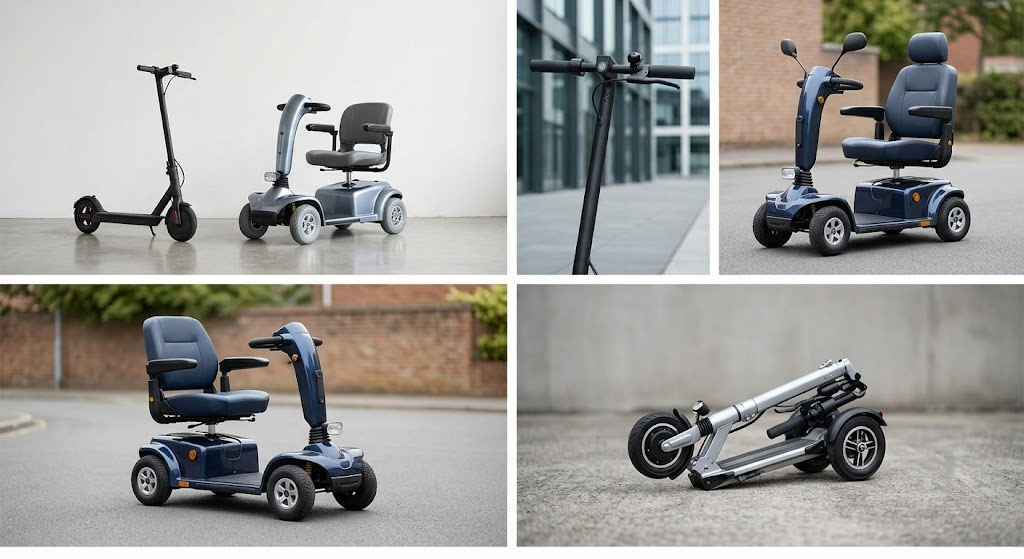
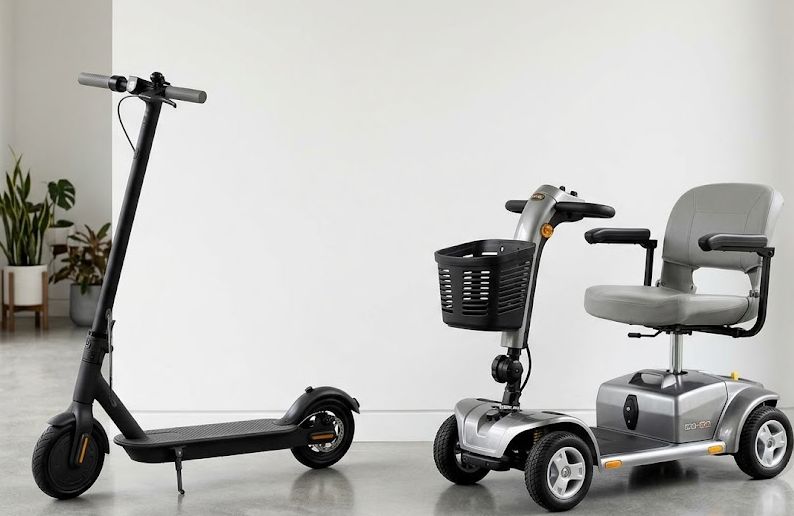
Also searched as “motorized scooter for adults,” this term can refer to either stand-up scooters or seated mobility scooters. Some people mean a stand-up electric scooter for commuting. Others mean a seated mobility scooter for adults who need help with walking distance, errands, shopping, outdoor movement, or daily independence.
Many adults search this term because they are not sure whether they need a commuting scooter, a seated scooter for errands, or a mobility aid for an older parent.
Before comparing 3-wheel, 4-wheel, foldable, or long-range models, the first step is simple: decide whether the rider needs to stand and balance, or sit and ride with more support.
First, Decide Whether You Need a Stand-Up Scooter or a Seated Mobility Scooter
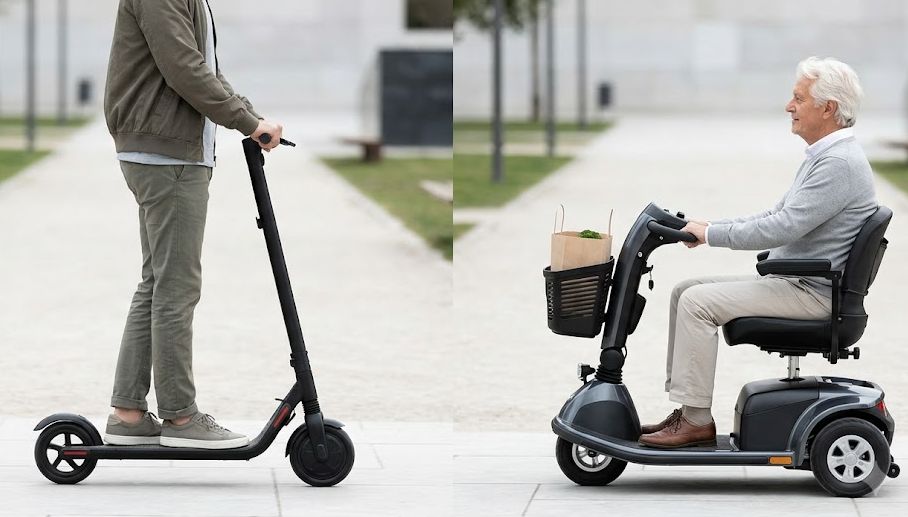
A stand-up scooter usually fits adults who want short-distance transport, can balance confidently, and are comfortable standing while riding. It is closer to a commuting device.
A seated mobility scooter is different. It is designed for adults who may walk short distances but need support for longer trips, daily errands, or outdoor movement. It usually has a seat, foot platform, handlebars or tiller-style controls, and either three or four wheels.
If the rider is older, has limited walking distance, feels tired easily, or needs support during shopping or neighborhood trips, a seated scooter is usually the more relevant category. If the rider has serious balance, vision, cognitive, or transfer difficulties, it is safer to ask a doctor, physical therapist, or occupational therapist before buying.
Match the Scooter Type to the Adult Rider’s Real Use Case
The right scooter depends on the rider’s normal week, not just the product name.
Someone living in a small apartment may need tight turning and easy storage. A parent who uses the scooter for pharmacy visits may need a comfortable seat, stable handling, and simple controls. A caregiver may care most about lifting weight, folded size, and where the scooter will charge.
Ask these questions first:
Will the scooter be used indoors, outdoors, or both?
Does someone need to load it into a car?
Will the rider carry groceries or a small bag?
Does the rider need more stability, or more portability?
How long will the rider usually sit?
These answers matter more than choosing the model with the largest numbers.
Compare 3-Wheel, 4-Wheel, Foldable, and Long-Range Models
Different seated scooters solve different problems.
Once the main type is clear, families can compare a motorised scooter for adults by routine, stability, portability, and comfort instead of looking at specs alone.
Different Daily Needs Call for Different Scooter Types
A compact folding scooter fits someone who needs short daily rides, small-space storage, or car travel. It is useful when portability matters as much as riding comfort.
A 4-wheel scooter makes more sense for adults who want a steadier outdoor feel for errands, sidewalks, parks, or family outings. It may be less convenient in tight indoor routes, but it often gives more confidence outdoors.
A premium long-range scooter is better for riders who spend more time outside or need stronger comfort support. It may not be necessary for someone who only rides around the block, but it can be valuable for longer trips.
The point is not that one type is best for every adult. The point is to match the scooter to the rider’s daily life.
Check the Specs That Matter Most for Each Rider
Specifications are useful only when tied to real use.
For indoor riders, check width, turning radius, and whether the scooter fits through doorways. For outdoor riders, check brakes, tires, stability, lights, and range. For caregivers, check total weight, folded dimensions, and the heaviest piece. For older riders, check seat support, armrests, low-speed control, and whether the rider can get on and off calmly.
Long battery range adds little value if the rider only uses the scooter nearby. A foldable scooter loses practicality if the heaviest piece is still too difficult to lift. Weight capacity should also account for the rider, bags, groceries, and anything else carried during daily trips.
Avoid These Common Buying Mistakes
Specifications are useful only when they prevent real-life problems. The goal is not to collect the biggest numbers, but to avoid choosing a scooter that does not fit the rider’s home, body, routine, or support system.
• The scooter arrives, but it cannot move easily through the home.
This often happens when families forget to measure the narrowest doorway, tightest hallway turn, elevator space, or storage corner before buying.
• The buyer pays for the range the rider rarely uses.
Extra battery range sounds reassuring, but it may not matter much if the rider only uses the scooter around the neighborhood, inside a senior community, or for short errands.
• The scooter folds, but no one can lift it.
Foldability only helps when the heaviest piece is manageable. Always check the heaviest part, not just the total product weight.
• The scooter feels less steady once bags or groceries are added.
Weight capacity should account for the rider’s body weight plus anything they usually carry, such as a purse, oxygen bag, groceries, or daily items.
• The rider avoids using it even though the scooter looks good online.
This can happen when the seat feels cramped, the controls feel confusing, or getting on and off feels stressful.
FAQ
My parents have trouble walking but can sit upright. Should I look at a seated scooter?
Yes, a seated mobility scooter may be more suitable than a stand-up scooter if the rider needs support for errands, neighborhood trips, or longer walking distances.
If an adult only rides near home, does long range matter?
Not much. For short neighborhood use, comfort, braking, easy storage, and low-speed control may matter more than extra-long battery range.
Should I buy a motorised scooter if the rider only needs help sometimes?
Maybe. If the need is temporary, renting or borrowing may make more sense. If the rider regularly avoids errands, appointments, or outdoor movement because walking is difficult, buying a seated mobility scooter may be worth considering.
What if I need to lift the scooter into a car?
Check folded dimensions and the heaviest piece before buying. A scooter can be foldable but still too heavy for one person to load safely.
Conclusion
If the rider can stand and balance well, a stand-up scooter may fit short commuting. If walking distance, comfort, or stability is the main concern, start with seated mobility scooters. From there, choose compact 3-wheel for small spaces, 4-wheel for outdoor steadiness, foldable for car travel, and long-range models for longer outings.












 Читайте vgolos.org на Google News